+1 (226) 337-9660

 English
Search

In less than a decade, ethanol production has evolved from systems heavily concentrated on a single feedstock to a more diversified biofuel landscape, in which corn ethanol has become increasingly relevant from both an energy and industrial perspective.
Corn ethanol production requires reliable industrial infrastructure, mature process engineering, and equipment capable of operating with high availability and reliability throughout the year.
Corn ethanol is a biofuel produced from the starch contained in the corn grain. From a chemical standpoint, it is identical to ethanol produced from sugarcane, since both result in either hydrous or anhydrous ethanol, used in gasoline blending or as a direct fuel.
While sugarcane already provides readily fermentable sugars, corn requires an additional step to convert starch into simple sugars before fermentation. This makes the process more industrially complex while also creating opportunities for greater process control, standardization, and continuous operation.

The corn ethanol production process is longer and technically more demanding than sugar-based ethanol production. It involves a sequence of integrated steps in which process engineering and equipment reliability are essential.
Corn arrives as corn grain and goes through cleaning systems and silo storage. It is then sent to the milling process, where mills reduce the grain to a particle size suitable for exposing the starch.
This stage is critical, since overly coarse milling reduces yield, while excessively fine milling increases energy consumption and equipment wear. The balance depends on proper equipment sizing and mechanical stability.
Because corn is rich in starch, it must be converted into fermentable sugars. This occurs in two phases:
Ground corn is mixed with water and heated, forming a gel-like mixture. During this stage, starch begins to break down through enzymatic action, and the mixture becomes more fluid.
The temperature is reduced, and through the action of glucoamylase, the remaining starch is converted into glucose.
This stage requires strict control of temperature, pH, and residence time, as well as equipment capable of operating under severe thermal conditions.
The sugary mash is sent to fermentation tanks, where yeast converts the sugars into ethanol and CO₂. In modern plants, process integration and industrial know-how can shorten fermentation time compared with more traditional corn-dedicated configurations, increasing fermenter productivity.
After fermentation, the process moves to the distillation process. At this stage, ethanol is separated from water and other compounds based on boiling point differences, resulting in hydrous ethanol with approximately 92% to 95% purity.
When the end use requires anhydrous ethanol, such as gasoline blending or specific industrial applications, hydrous ethanol goes through an additional dehydration stage. This step removes the remaining water, increasing purity to more than 99.5%, generally through molecular sieves or equivalent systems.
At the same time, the solid residues from fermentation, mainly composed of fibers, proteins, and yeast, are separated by centrifugation. This material is then dried, producing distillers grains (DDG) or distillers grains with solubles (DDGS), by-products widely used in animal nutrition. Corn oil is also extracted through physical processes and may be used for biodiesel production or industrial applications.
This stage includes some of the most critical equipment in the plant, such as distillation columns, dehydration systems, centrifuges, dryers, and heat exchangers. These are large-scale, energy-intensive systems with strong thermal and mechanical integration, where operational stability and equipment reliability have a direct impact on overall plant efficiency.

The corn ethanol sector has consolidated three main industrial plant architectures: full plants, flex plants, and flex-full plants. Each model responds to a different context of feedstock availability, energy infrastructure, and investment strategy, while bringing specific engineering, operation, and maintenance challenges.
Full plants are facilities designed from the ground up to process only corn, operating virtually year-round.
The main advantage of full plants lies in their optimized design. All equipment, process flows, and control systems are designed specifically for corn, without the need for adaptation or coexistence with another industrial process. This simplifies annual logistics planning for grain receipt, ethanol distribution, and by-product handling.
The main challenge of this model lies in the energy matrix. Unlike sugarcane mills, full corn ethanol plants do not generate their own biomass for steam and power generation. Therefore, they depend on external sources such as eucalyptus chips, forest residues, natural gas, or biogas. This decision directly affects CAPEX, OPEX, and the reliability of energy operations.
In terms of scale, full corn ethanol plants often operate between 200 and 900 million liters per year, requiring robust equipment, high operational availability, and very well-planned maintenance, since the plant does not benefit from long shutdown windows.
The flex model emerged as a solution to increase the utilization of existing industrial assets. In this model, the plant can process more than one feedstock in different periods of the year.
The main advantage lies in using existing infrastructure and energy systems, which helps dilute investment and fixed costs by keeping the plant active for more months per year. However, the model requires additional equipment, such as corn milling, hydrolysis, and saccharification systems, along with utility and process control adjustments.
Flex-full plants represent the model that operates with two independent industrial lines, one dedicated to one feedstock and the other to corn, running in parallel. This arrangement maximizes the use of assets, infrastructure, and energy, resulting in one of the best returns on investment in the sector.
On the other hand, it is a model that requires a high level of engineering complexity, automation, and operational management. These are larger plants with integrated systems, a greater number of critical pieces of equipment, and a strong need for highly coordinated maintenance to avoid cross-impact between process lines.
|
Plant model |
Main characteristics |
Operational profile |
|
Full plants |
Facilities dedicated exclusively to corn |
Continuous year-round operation with high process specialization |
|
Flex plants |
Integration of multiple feedstocks in distinct periods |
One feedstock during one season, corn during the off-season |
|
Flex-full plants |
Two independent process lines |
Simultaneous operation with maximum asset utilization |
In a corn ethanol plant, which normally operates throughout the year, reliability is a basic requirement for operational survival. Any unplanned failure has an immediate impact on production, energy consumption, and cost per liter produced.
For this reason, the design and selection of the main equipment must consider nominal capacity, continuous-duty operation, abrasive environments, load variations, ease of maintenance, and of course, component reliability.
Milling systems are at the front line of the process. Mills, conveyors, bucket elevators, and screens operate under constant load, handling a naturally abrasive material with variations in moisture and particle size.
Poorly sized or unstable milling creates bottlenecks that propagate throughout the plant. Particle size outside the target range reduces starch conversion efficiency, increases energy consumption in downstream steps, and accelerates wear in pumps, pipelines, and reactors. In addition, shutdowns at this point interrupt the entire production flow, making mechanical robustness and reliable drive systems critical factors.
During the conversion of starch into fermentable sugars, reactors, cookers, saccharification tanks, and heat exchangers come into operation. These systems work under strict thermal control, with narrow temperature, pressure, and pH ranges.
Small operational deviations at this stage may not appear immediately as breakdowns, but they translate into yield losses, higher steam consumption, process instability in fermentation, and increased operating costs over time. Therefore, beyond vessel design itself, the reliability of agitation, pumping, and thermal control systems is crucial to keeping the process stable.
The stages of distillation, dehydration, and drying include some of the most expensive and energy-intensive equipment in the plant. Distillation columns, evaporators, centrifuges, and rotary dryers operate with high thermal inertia and large product volumes.
Any unplanned downtime in this area usually carries high costs, both from lost production and from the time required to restabilize the process. These systems therefore require precise engineering, well-designed thermal integration, and a maintenance strategy focused on failure prevention and operational predictability.
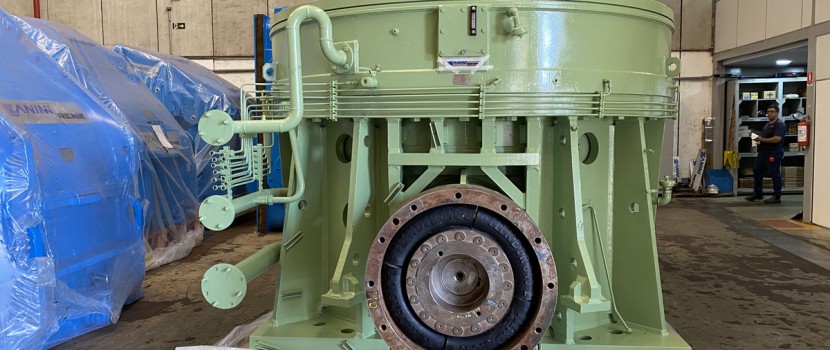
Virtually all rotating equipment in a corn ethanol plant depends on reliable power transmission systems. Mills, agitators, pumps, conveyors, centrifuges, and dryers only operate properly when motors and industrial gearboxes deliver the required torque and speed continuously.
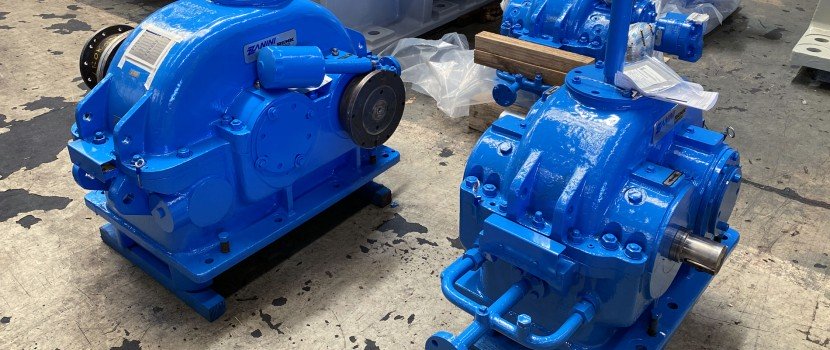
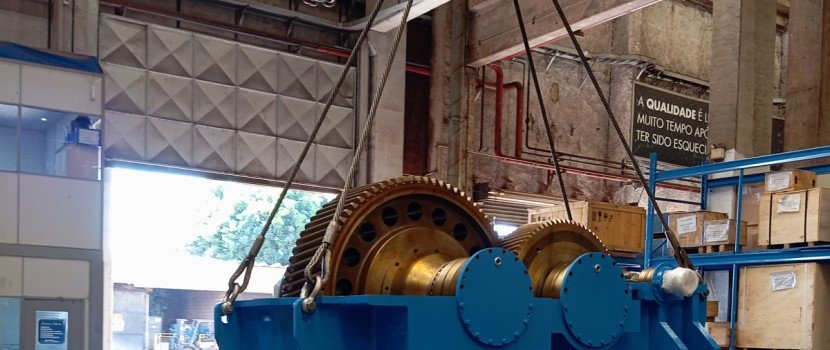
Gear reducers, in particular, operate under severe conditions such as variable loads, long operating cycles, constant vibration, and often hot and humid environments. A failure in a critical industrial gearbox can shut down entire sections of the process, directly affecting plant availability.
In this context, custom-designed industrial gearbox solutions engineered specifically for real operating conditions are essential to keep the plant running safely. The correct selection reduces the risk of unplanned downtime and contributes to operational stability throughout the plant lifecycle.
The accelerated expansion of the corn ethanol industry imposes a new level of demand on industrial infrastructure. Plants that operate almost year-round, with high capital investment and integrated processes, cannot depend on generic or short-term solutions. In this scenario, suppliers capable of understanding the process as a whole and delivering critical equipment with proven reliability take on a strategic role.
Zanini Renk positions itself as a long-term technical partner for plants that need to combine scale, operational availability, and energy efficiency in a rapidly changing biofuel industry.
Over decades, Zanini Renk has built strong experience supplying industrial gearbox systems and power transmission systems for demanding industrial sectors. This background includes deep knowledge of real operating conditions such as severe environments, continuous-duty operation, variable loads, short maintenance windows, and high pressure for availability.
This know-how applies directly to the corn ethanol industry, with the necessary adaptations to the specific demands of the process. Grain milling creates greater abrasion in mechanical systems, year-round operation requires continuous reliability, and dosing, agitation, and transport systems demand high precision and repeatability.
Over the years, Zanini Renk has developed and improved a portfolio of custom industrial gearbox solutions, special drive systems, and transmission solutions designed to withstand these extreme conditions, with a focus on uptime, energy efficiency, and predictable maintenance.
A concrete example of Zanini Renk’s position in the corn ethanol industry is the sale of a complete plant with a capacity of 600,000 liters per day for a facility in northern Minas Gerais, Brazil. Start-up is scheduled for the first quarter of 2027.
This capacity is equivalent to approximately 200 million liters per year, characterizing a medium-to-large plant with a high degree of industrial complexity. The project involves customized engineering, careful material selection, specific sizing for the operational profile of the plant, and technical support aligned with the customer’s requirements.
Zanini Renk supplies tailored solutions considering plant capacity, local feedstock characteristics, operational profile, and project efficiency goals. In addition to supplying industrial equipment, the company also works under a turnkey model, assuming full responsibility for the project, from engineering through installation and operational follow-up.
The company also has a technical assistance network and spare parts support, a critical factor for plants operating continuously and unable to absorb extended downtime.
Its commitment to quality standards, international certifications, energy efficiency, and mechanical reliability is part of this value proposition. In a sector that moves billions of dollars and operates with margins increasingly dependent on operational efficiency, choosing industrial partners is no longer a one-time decision but a strategic one.
In other words, Zanini Renk is an active part of the development of the corn ethanol plants shaping the future of the biofuel energy sector.
Corn ethanol is already a consolidated reality in the biofuel sector and is expected to continue growing in relevance over the coming years. This progress, however, does not depend only on agricultural productivity. It requires solid industrial engineering, reliable equipment, and partners capable of supporting continuous operations.
Large-scale projects show that the sector has entered a new phase, one in which the choice of strategic suppliers makes a direct difference in operational efficiency, profitability, and sustainable energy production.
Zanini Renk is positioned as a technical partner for facilities that see corn ethanol production as a long-term industrial asset.
Rely on Zanini Renk to reduce operational risk in corn ethanol plants through complete solutions in state-of-the-art industrial equipment, industrial gearbox systems, and power transmission systems designed for continuous operation, severe loads, and high availability.