+1 (226) 337-9660

 English
Search

An industrial gearbox is a core component in power transmission systems. Its performance directly affects energy efficiency, torque delivery, operational reliability, and equipment lifespan. Managing the entire lifecycle of an industrial gear reducer is essential to achieving long-term mechanical efficiency and reduced downtime.
Discover how strategic improvements can increase industrial gearbox efficiency, extend gearbox service life, and optimize operational results all while reducing costs.
The equipment life cycle refers to all phases an asset goes through from acquisition to decommissioning. Each phase requires specific strategies to maximize durability, reliability, and industrial gearbox efficiency.
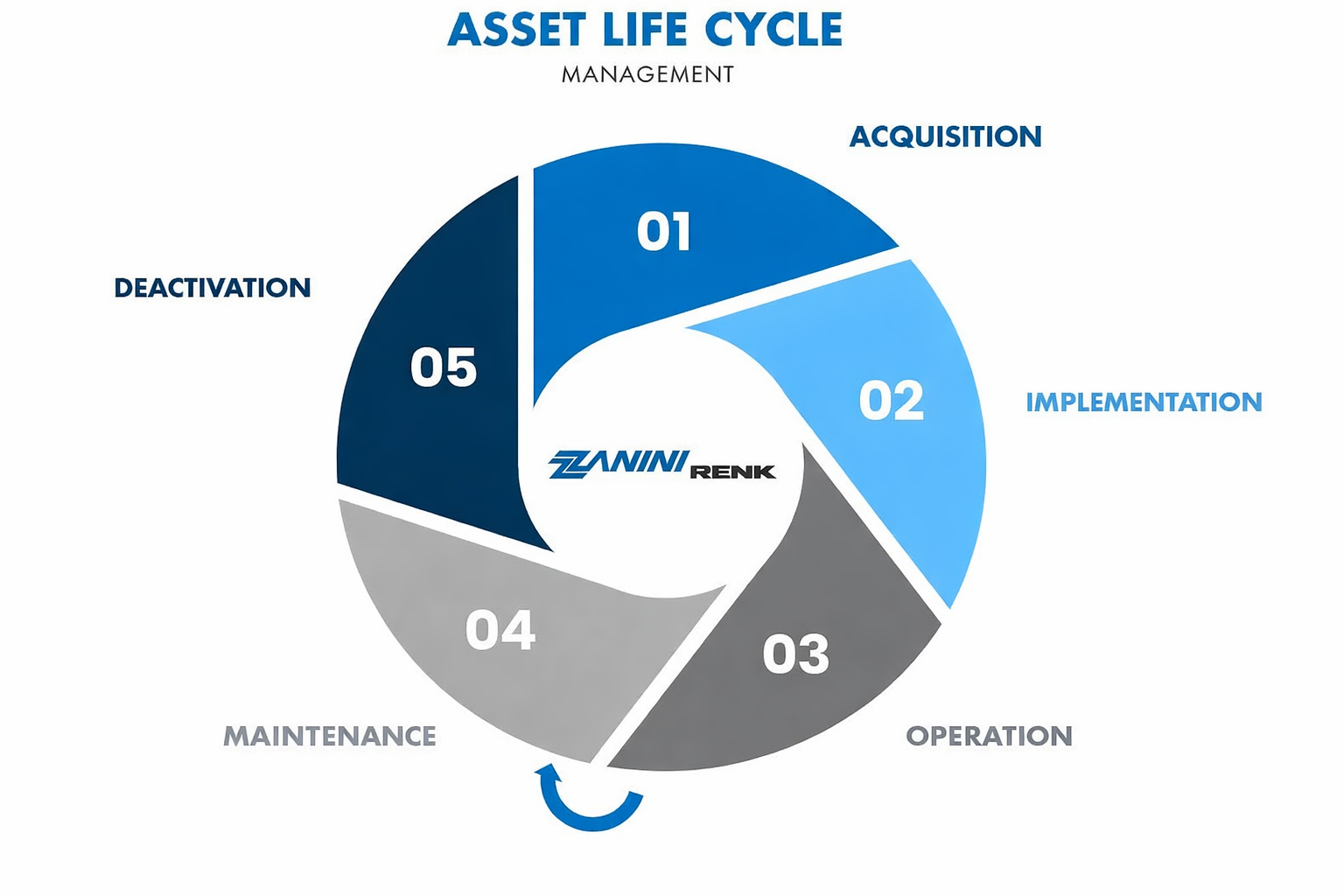
The life cycle begins with proper gear reducer selection. At this stage, it is essential to evaluate cost-effectiveness, performance, durability, torque capacity, reduction ratio, and technical specifications. A correct decision at this stage directly impacts gearbox efficiency and extended service life.
After acquisition, the industrial speed reducer undergoes installation. Following manufacturer guidelines and ensuring proper alignment between the motor and the industrial gearbox is critical. Incorrect alignment, improper mounting configuration, or shaft misalignment can compromise power transmission efficiency and accelerate mechanical losses.
Operation is the longest and most critical phase. During continuous operation, it is essential to monitor:
Operating beyond operational limits or under heavy-duty operation without proper load control can reduce gearbox service life and increase wear on gears, bearings, and seals.
Preventive maintenance and predictive maintenance are fundamental for extending equipment lifespan.
Regular inspections help detect early wear in:
Proactive maintenance practices reduce downtime and improve reliability.
When the industrial gear drive reaches the end of its operational life, deactivation must follow environmental and safety regulations. Equipment may be recycled, resold, or responsibly disposed of.
Proper lifecycle management of industrial machinery and heavy equipment reduces unexpected failures and improves operational safety.
Below are the key management strategies:
|
Phase |
Management strategies |
|
Planning |
Identify operational needs, evaluate market options, consider regulatory requirements, and define budget constraints. |
|
Acquisition and implementation |
Ensure adequate budgeting, including installation costs, operator training, and correct system configuration. Perform proper installation and technical training. |
|
Operation and maintenance |
Apply preventive maintenance and predictive maintenance practices. Monitor performance continuously to detect issues before they become critical. |
|
Decommissioning and disposal |
Deactivate, resell, recycle, or dispose of equipment responsibly, following environmental and safety regulations. |
Proper gearbox sizing is fundamental. An industrial gearbox must be selected considering the appropriate torque, power, and rotational speed for each application. Evaluating torque capacity, output torque, reduction ratio, and service factor ensures reliability and operational safety. Incorrect sizing can result in overload, accelerated wear, and reduced service life.
If you have any questions, contact Zanini Renk. Our team is ready to support your application requirements.
Installation must follow manufacturer specifications. Proper alignment between the motor and the power transmission gearbox is essential for smooth operation and mechanical efficiency.
Preventive and predictive maintenance are essential to identify and correct minor issues before they become major failures. Regular maintenance helps prevent unexpected downtime and extends the service life of the speed reducer.
Regular cleaning prevents contamination inside the housing. Dirt and debris can affect gear meshing, bearings, and seals, increasing mechanical losses.
Proper lubrication is critical to reduce wear and maintain industrial gearbox efficiency. For industrial gear reducers, the gear oil must be formulated as Extreme Pressure (EP) oil to withstand high-load conditions without losing protective properties.
High-quality gear oil must provide:
An oil with a viscosity index above 95 (DIN standards) is highly recommended to maintain film strength under heavy-duty operation and high-temperature conditions.
A properly maintained lubrication system ensures reduced wear, improved energy efficiency, and extended service life.
If the industrial speed reducer is not in operation, it should be stored in a dry environment protected from moisture, contaminants, and chemicals.
Large industrial gear drives stored outdoors must be properly sealed to prevent corrosion or contamination.
Avoid overload conditions and excessive impacts. Proper load control and torque control are essential to protect gears, shafts, bearings, and seals. Prevent overheating during continuous operation to maintain mechanical efficiency and durability.
Selecting a high-quality industrial gearbox manufactured with advanced engineering and durable materials significantly improves reliability and reduces downtime. Zanini Renk industrial gear reducers are developed through advanced research, specialized engineering, and modern manufacturing processes.
Using high-durability materials and state-of-the-art machining, our industrial gear drives deliver the reliability required for demanding industrial applications.
Have questions? Contact our team of specialists.