+1 (226) 337-9660

 English
Search

Major industrial interventions demand excellent planning, because the team needs to define the scope, the shutdown window, execution risks, commissioning, and the return to operation. Any planning failure can lead to delays, rework, or the need for another shutdown shortly after start-up, generating losses that could have been avoided.
That is why this type of intervention must be treated as a complete industrial project, with engineering, maintenance, operations, safety, suppliers, and manufacturers working in an integrated way.
A major industrial intervention is a planned shutdown that goes beyond routine maintenance. While regular preventive maintenance involves inspections, adjustments, scheduled replacements, and localized overhauls, a major intervention requires a total or partial production stop to replace, install, rebuild, or modernize large equipment and systems.
This type of shutdown may involve:
The biggest difference lies in the impact of the project: it changes a critical part of the operation, mobilizes larger teams, depends on a limited shutdown window, and only ends when the equipment has been commissioned, tested, and cleared to operate safely.
In industry, these interventions are also known as:
Not every industrial shutdown is a strategic decision. Very often, it is imposed by three critical factors:
The key question is not only "what needs to be done?", but "what scope can be executed safely in this period?" and "with what risks during assembly, testing, and start-up?".
Read also: Maintenance plan: a winning strategy in industry
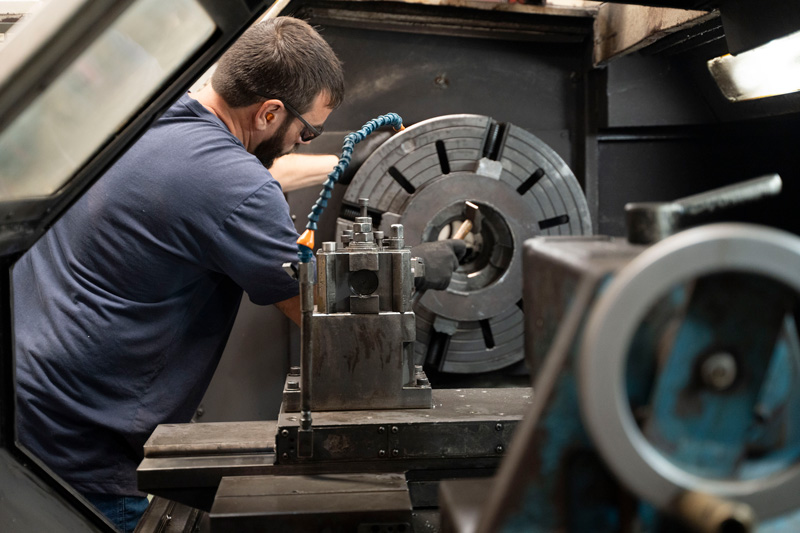
In major industrial interventions, defining the scope is one of the most important steps, since the expected result depends largely on getting it right. If the scope is poorly defined from the start, the entire plan is compromised.
A study by AP-Networks, based on a database of more than 1,350 turnarounds, shows how serious the problem is: more than two-thirds of major turnarounds exceed planned cost and schedule by at least 10% and face critical problems after the return to operation. On top of that, 40% show cost or schedule deviations above 30%.
The same study identifies scope as the most critical factor for the outcome, because it is the basis for cost, schedule, and operational reliability. In other words, many major interventions fail because the scope was never properly defined.
Each item included in the scope must have:
The safest way to organize the scope is through a Work Breakdown Structure (WBS).
The WBS divides the intervention into smaller, traceable blocks. Instead of treating the shutdown as one large package, it separates the work by systems, areas, equipment, disciplines, and execution fronts.
This makes it easier to understand:
In a major intervention, the WBS connects four essential points:
|
Element |
How it connects to the scope |
|
Schedule |
Each activity needs a clear duration, sequence, and dependencies. |
|
Budget |
Each work front needs an estimated cost, with materials and labor accounted for. |
|
Risks |
Each package must show the risks of delay, interference, safety issues, and commissioning problems. |
|
Execution control |
Each deliverable needs a defined owner and acceptance criterion. |
Within the WBS, the work package is the practical unit of execution. A gear reducer replacement front, for example, cannot go to the field with only a generic description. It needs:
Without this, what looks like a detail during planning turns into a delay during the shutdown.
Scope creep happens when new items enter the shutdown without proper control. It is common in major interventions because several areas take part in planning at the same time (maintenance, production, engineering, safety, operations, and suppliers), and each one has legitimate priorities.
The problem appears when there is no clear rule to decide what goes in and what stays out of the scope. The list grows, resources are reallocated, the schedule comes under pressure, and the budget stops reflecting the reality of execution. And any late change affects several fronts at once.
That is why the scope freeze is a critical step. It marks the moment when the scope stops being an open list and becomes the official baseline for procurement, contracting, engineering, logistics, safety, execution, and commissioning. From then on, nothing goes in or out.
Changing the scope after that point usually costs much more than including the item at the beginning, for a simple reason:
Read also: How to improve industrial gearbox efficiency and extend its service life
Not everything that needs to be done belongs in the major intervention. The main criterion must be operational reliability. So the scope question is not just "would it be good to do this?", but "does the risk of not doing it justify using time, crew, and budget within the shutdown window?".
These are the main criteria that help make this decision:
|
Item type |
Main criterion |
When to include it |
|
Equipment critical to the operation |
Impact of a failure on production, safety, or the restart of the unit. |
When a failure could stop the operation, create significant risk, or compromise start-up. |
|
Correction with a clear economic gain |
Cost of the avoided failure versus the incremental cost of including the work. |
When doing it now costs less than dealing with the failure during the harvest or with the plant running. |
|
Work that takes advantage of existing mobilization |
Savings from doing it during the shutdown, with crews, access, and resources already in place. |
When cost and risk would be higher if the work were done later, with the unit in operation. |
These criteria prevent common mistakes, such as leaving critical items out to shorten the schedule, or adding low-priority work just because "the plant will already be down".
A well-planned shutdown is not the one with the largest possible scope, but the one with the right scope: enough to reduce risk, protect operational reliability, and allow a safe restart, without turning the intervention into a string of last-minute additions.

The shutdown decision has to balance two costs:
Siemens’ True Cost of Downtime 2024 report puts this risk in global perspective: the world’s 500 largest companies lose almost US$1.4 trillion a year to unplanned downtime, equivalent to 11% of their revenue. In heavy industry, the annual cost of a stopped line at a large plant reaches US$59 million, 1.6 times higher than in 2019.
These figures show why the shutdown window is not just an operational decision, but a high-stakes financial decision.
Major interventions need effective planning that looks about a year and a half ahead. The more complex the equipment involved, the earlier engineering, procurement, manufacturing, mobilization, and hiring of specialized teams need to start.
|
Phase |
Critical deliverables |
|
18 to 12 months before: conceptual phase |
Preliminary scope definition, risk analysis, initial cost estimate, feasibility study, and identification of critical equipment. |
|
12 to 6 months before: preliminary preparation |
Technical validation of the scope, contracting of main suppliers, definition of the shutdown strategy, materials survey, and assessment of manufacturing lead times. |
|
6 to 4 months before: detailed planning |
Closed WBS, defined work packages, integrated schedule, safety plans, field resources, logistics, and commissioning criteria. |
|
4 months before until shutdown start: final preparation |
Scope freeze, confirmation of materials, release of drawings, alignment between teams, pre-shutdown inspections, permits, access, and contingency plan. |
|
Shutdown execution |
Disassembly, inspection, assembly, adjustments, intermediate tests, daily progress control, deviation management, and preparation for commissioning. |
|
Post-shutdown |
Commissioning, start-up, assisted operation, performance analysis, lessons learned, and update of the asset’s technical history. |
This sequence makes it possible to settle, before the shutdown, everything that should not become a last-minute decision during execution.
The best time to schedule a shutdown varies according to the sector and the plant’s operating regime, so planning needs to account for the reality of each one.
In sugar and ethanol plants, the off-season between harvests is usually the main window for major interventions. This is when the following take place:
The reason is simple: the shutdown cannot compromise the start of the next harvest.
Read also: Predictive maintenance: what it is, techniques, how to implement
In the steel and mining sectors, many operations run continuously, so the window is defined by asset criticality, the operating condition of the plant, the availability of redundant equipment, and the commercial impact of reduced production.
Read also: RSG For Mining: the gearbox engineered for mining operations
In the energy sector, the calendar may be shaped by grid demand, the availability of generating units, supply contracts, and lower-load periods. For turbines, generators, speed increasers, and auxiliary systems, the shutdown must be planned to reduce technical risk without compromising energy availability.
Read also: What is bioenergy? Environmental impact and applications
The difference between a planned and an unplanned shutdown comes down to control:
Even under conservative estimates, emergency corrective maintenance typically costs 3 to 4 times more than a planned preventive intervention. According to data from Tractian, unplanned repairs can cost 3 to 10 times more than scheduled preventive maintenance, mostly because of overtime, rush freight, parts unavailability, secondary damage, and lost production.
In Brazil, this risk is also tied to the maturity of maintenance planning. A survey published by Revista Manutenção found that 25% of the companies analyzed did not have a structured Maintenance Planning and Control (MPC) process to organize maintenance shutdowns.
Without it, companies tend to work in reactive mode:
In large industrial equipment such as gear reducers, turbines, boilers, and drive systems, this effect is even more pronounced. A failure rarely affects only the damaged component: it can stop entire lines, jeopardize contracts, reduce efficiency, and force the plant to restart with higher technical risk.
When a necessary shutdown is postponed without a technical reason, the company trades a planned intervention for a possible emergency, which is usually more expensive, less predictable, and harder to control.
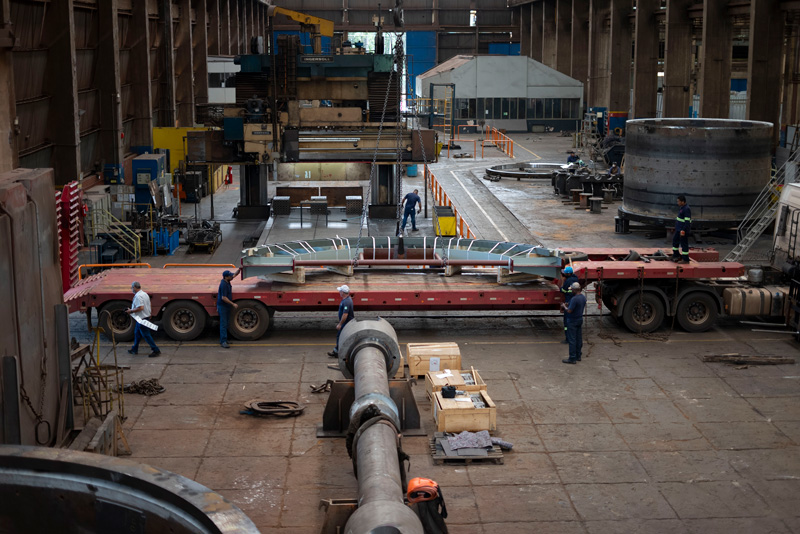
Execution is the real test of shutdown planning. This is when dozens of fronts work at the same time (in-house crews, contractors, heavy lifts, and disassembly), and any coordination failure leads to delays, rework, or accidents.
Control during this phase rests on three pillars:
In major interventions, controlled execution means more than meeting the deadline. It means keeping fronts coordinated, reducing interference, controlling changes, and making sure each step moves forward without creating risk for the next one.
In an industrial shutdown, the schedule is driven by the logical execution sequence and by the interfaces between activities, never by a desired date.
The critical path method (CPM) identifies the steps that directly affect the shutdown end date. If a critical activity is delayed, the whole project is affected.
Example: to remove a gear reducer, a chain of dependencies has to be completed: electrical clearance → energy isolation → guard removal → lifting → base preparation. Any bottleneck in this sequence holds up the rest of the intervention.
Daily tracking exists to keep small delays from turning into structural problems. Beyond showing overall progress, it should highlight:
The S-curve is the main tool for comparing planned versus actual progress over time, on two fronts:
Reading physical and financial data together prevents a common mistake in shutdowns: spending more than planned without the corresponding progress in the field.
In major interventions, safety needs to be built in while the scope is still being defined, because many technical decisions determine the level of risk. For example:
This planning also covers risk analysis, rigging plans for lifts, energy control with lockout/tagout, confined space management, authorization for work at height, and specific requirements for equipment such as boilers and pressure vessels.
Although commissioning is the step that validates what was done during the intervention, it cannot be left to the end of the process. It has to be planned together with the intervention, because it requires defining how systems will be verified, tested, released, and put into operation (start-up).
A poorly designed commissioning plan can be as dangerous as a poorly defined scope.
The AP-Networks study shows that failures right after the return to operation, called "trip after startup" in the report, rank among the worst outcome categories in turnarounds. In other words, finishing the physical work does not mean finishing the intervention. The project is only successful when the system is back in operation safely, stably, and at the specified performance.
Commissioning is the process that confirms whether the systems and components installed during the intervention are correct, integrated, and ready to operate as specified. This verification happens before the equipment is released for use again, and its purpose is to hand the installation over from the builder, installer, or supplier to operations in an orderly, safe, and traceable way.
In a major intervention, this includes checking:
The goal is not just to "see if it turns on", but to prove that the assembly can operate without creating risk to people, machinery, or processes.
This step becomes even more critical when the intervention involves new equipment or a new operating configuration, such as large industrial gear reducers, turbines, power transmission systems, adapted bases, auxiliary systems, or integrated automation. Even if each component was manufactured and installed correctly, the assembly is only truly validated once its interfaces have been tested.
That is why commissioning needs its own scope, defined owners, acceptance criteria, a test sequence, and a response plan for deviations.
These stages have very different roles:
|
Phase |
What happens |
Main responsible parties |
|
Pre-commissioning |
Static checks before any movement or operational energization. Includes mechanical assembly, preliminary alignment, piping integrity, electrical continuity, instrument installation, cleaning, system closure, and document review. |
Installation, maintenance, engineering, quality, safety, and the suppliers involved. |
|
Commissioning |
Tests with systems energized or in functional condition, but still without product or process load. Validates interlocks, protections, controls, sensors, automation, lubrication, free rotation, communication between subsystems, and operational responses. |
Engineering, automation, maintenance, operations, safety, and supplier technical support. |
|
Start-up |
First operation under real conditions, with process load, product, steam, torque, speed, pressure, or temperature. This is the phase for fine-tuning parameters and confirming how the assembly behaves in operation. |
Operations, maintenance, process engineering, and specialists in the critical equipment. |
|
Assisted operation |
Close monitoring during the first weeks after start-up to identify vibration, overheating, leaks, noise, instrumentation deviations, process instability, or integration failures. |
Operations, maintenance, reliability, and the supplier’s technical team or field service. |
These stages reduce the risk of discovering problems too late. What can be corrected during pre-commissioning, with little impact, can turn into a shutdown, mechanical damage, or lost production if it only shows up after start-up.
Commissioning failures usually appear at the interfaces: one subsystem was delivered correctly, so was another, but the assembly as a whole was not tested enough. The most common problems include:
In gear reducers, turbines, and drive systems, these deviations directly affect equipment integrity. Misalignment beyond tolerance can increase vibration and heating. Inadequate initial lubrication can damage plain bearings, gears, or rolling bearings in the first operating cycles. And an incorrect parameter setting can allow start-up under unsuitable conditions or disable a protection that should have tripped.
When these problems are found during commissioning, the cost of correction tends to be manageable. If they only appear after start-up, they can cause weeks of unplanned downtime, rework, lost production, and irreversible damage to critical components.
High-criticality equipment should not be commissioned based only on the experience of the plant maintenance team. It is important to involve the manufacturer, which knows the torque limits, acceptable clearances, alignment tolerances, lubrication requirements, start-up procedures, critical inspection points, and how the equipment is expected to behave in its first hours of operation.
This is especially true when the intervention involves:
The plant team still plays a central role, because it knows the process and the operating routine. But the commissioning of complex equipment should be carried out as an integrated effort.
Start-up puts the system into operation, but it does not mean the plant has reached full stability. Right after it comes the ramp-up, the phase of gradual production stabilization up to the expected capacity. During this period, the plant runs under real conditions but may still be adjusting load, speed, pressure, temperature, flow, controls, protections, and process parameters.
This phase usually carries a higher risk than stable operation. New or modernized equipment is still bedding in, the operations team is learning how the systems now behave, and small anomalies can signal bigger problems in the making.
That is why assisted operation plays a decisive role. Keeping the technical team on site after start-up makes it possible to monitor vibration, temperature, oil pressure, leaks, noise, alarms, process variations, and the overall performance of the assembly. Instead of closing the project at the equipment’s first rotation, assisted operation follows the stabilization curve, preventing small deviations from becoming critical failures.
After start-up and initial stabilization, there are still technical deliverables that need to be formalized so the shutdown generates learning, traceability, and safety for the next cycle:
Without this step, the company completes a major intervention but does not improve the process, and runs the risk of each new shutdown facing the same delays, improvisation, and coordination failures that could already have been fixed in the previous cycle.
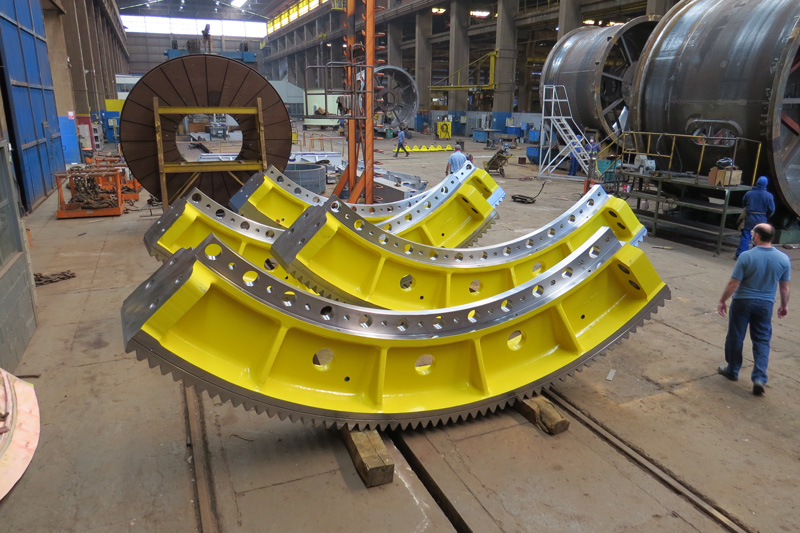
In major interventions involving critical power transmission equipment, the manufacturer needs to be involved before, during, and after the shutdown, because it knows:
This involvement matters even more in retrofit, modernization, and revamp projects. In these cases, the new equipment or component does not operate in isolation. It has to be integrated into an existing base, already installed auxiliary systems, a defined automation logic, and a given process condition.
That is why the manufacturer can contribute on three main fronts:
Zanini Renk works at this interface. With experience in speed reducers and other industrial drives for sectors such as mining, steel, cement, energy, and others, the company knows both the equipment design and the reality of field operation.
In a major intervention, this perspective makes a difference. The goal is not just to deliver a gear reducer, a turbine, or a drive system, but to support the full cycle: diagnosis, scope, execution, commissioning, start-up, and support throughout the equipment’s service life. For high-criticality assets, this integration between manufacturer, maintenance, and operations is one of the factors that contribute most to a safe and reliable restart.
Contact the Zanini Renk team of specialists and find the right solution for your plant.