+1 (226) 337-9660

 English
Search

The vertical roller mill is a type of grinding machine used to process raw materials and grind a wide range of materials, being widely used in cement manufacturing, metallurgy, the chemical industry, and other sectors. Over the years, cement plants have increasingly adopted this technology due to its high energy efficiency, low noise levels, low wear, and reduced pollutant emissions.
This article covers how vertical roller mills work, their efficiency advantages, and the innovations they have brought to the cement industry. We also discuss the importance of the speed reducer in this equipment and how Zanini Renk contributes to this sector.
The roller mill is a fundamental piece of equipment in the modern cement industry and operates in a simple and efficient manner, grinding materials through the pressure applied by rollers. It can grind everything from cement raw materials to coal, slag, bauxite, quartz sand, limestone, and more.
The equipment can have up to six large rollers that rotate over a grinding table, crushing the material through compression force. It can process even hard and abrasive materials, producing extremely fine powders.
This equipment is a complete industrial system, as it performs crushing, drying, grinding, classification, and material transport. Its hot gas streams can reach temperatures of up to 450 degrees C, allowing it to dry materials containing up to 15% moisture.
The main difference between this mill and others used in the industry, such as ball mills or rod mills, is that the rollers apply pressure directly onto the material being crushed, resulting in greater grinding efficiency. In ball and rod mills, materials are ground through impact and friction. In the vertical roller mill, the material is compressed between the rollers and the grinding table.
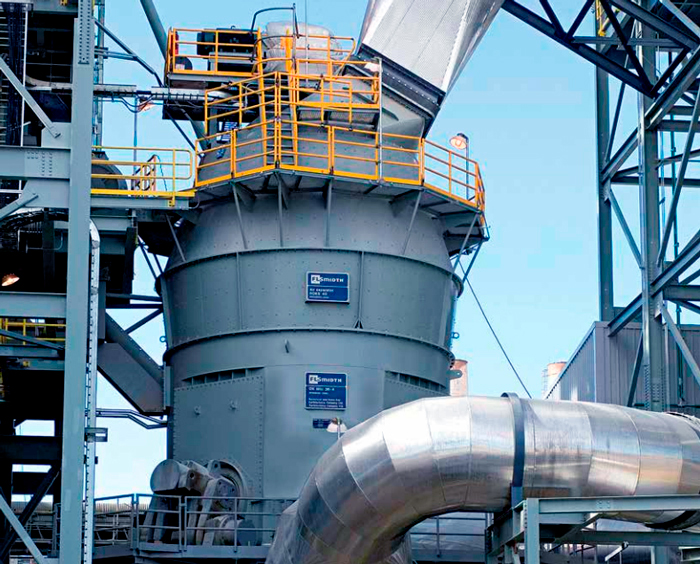
The roller mill also has lower wear due to fewer moving components, thus reducing maintenance requirements.
One of the greatest advantages of the roller mill, besides its excellent grinding capacity, is its energy efficiency.

Compared with other mills in the cement industry, it saves 20% to 30% on energy consumption. This is due to its compression grinding process, which requires less energy than impact and friction methods. For cement plants, this is an essential feature, representing a significant cost reduction as well as a lower environmental impact.
The roller mill also features low noise levels, being 20 to 25 dB quieter than the noise produced by ball mills.
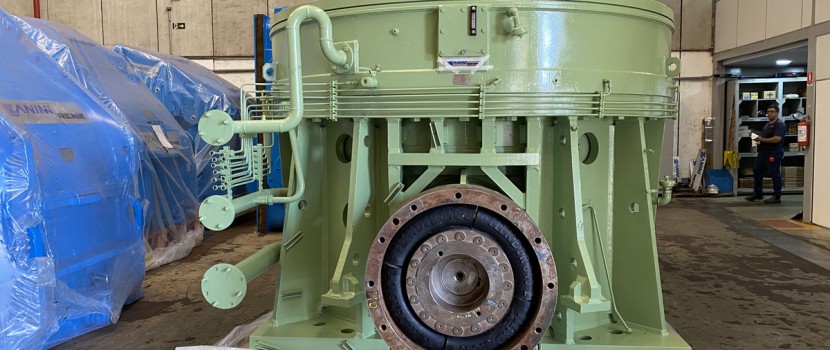
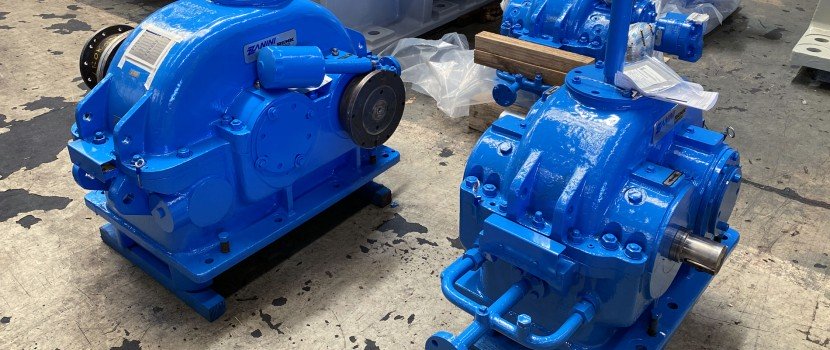
Speed reducers are mechanisms designed to reduce the rotational speed of the motor to the desired speed at the output shaft. These mechanisms are not only fundamental but vital for regulating the speed of the grinding rollers. Precisely adjusting this speed is a decisive step in optimizing the grinding process, ensuring that the material is processed efficiently and meets the required quality standards.
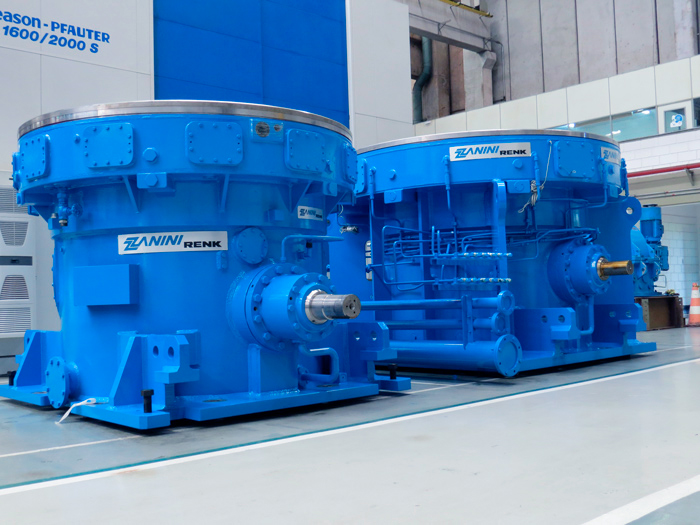
Proper speed adjustment is also very important for preventing mechanical failures, because strong vibration caused by equipment misadjustment can generate mechanical failures that affect the quality of the product. In addition, it is necessary to monitor material thickness, volume, accumulator pressure, among other details.
The main functions of the speed reducer in roller mills are:
At Zanini Renk, speed reducers for roller mills are manufactured with excellence, being synonymous with reliability and innovation. With an international reputation, we follow the highest quality standards, offering drives for vertical mills that are true mechanical masterpieces.
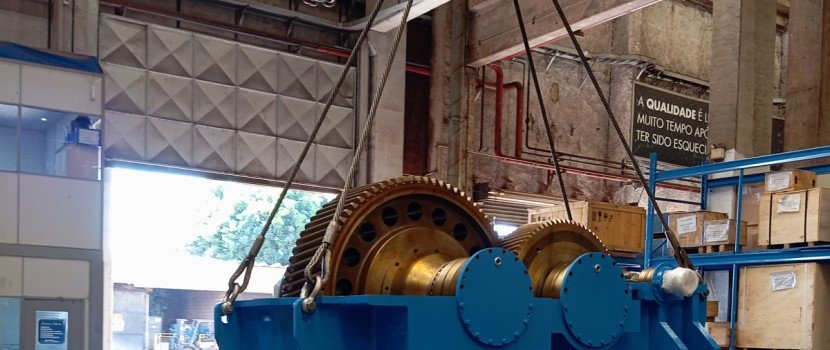
Our differentiator lies in the in-house production of critical components, such as bevel gear pairs and rotating assemblies, forged on cutting-edge machines and subjected to extremely precise heat treatment processes.
Choosing adequate, high-quality speed reducers ensures increased operational efficiency and robust, long-lasting performance under the most demanding market conditions.
The roller mill is a fundamental piece of equipment in cement production, representing efficiency and precision. With its ability to save energy, reduce operational costs, and improve product quality, it has established itself as a vital element in the modern cement industry.
The speed reducer is more than just a component in roller mills; it is a key enabler of efficiency and precision in industrial grinding. Its role in optimizing roller speed is indispensable for ensuring product quality, energy efficiency, and equipment longevity.
Zanini Renk has much to contribute to the cement sector, offering high-quality, reliable equipment as well as maintenance services to ensure proper operation. Talk to us.
By understanding and prioritizing the correct selection and maintenance of speed reducers, industries can maximize the performance of their mills, contributing to more efficient and sustainable production processes.