+1 (226) 337-9660

 English
Search

Planetary gears are essential components for various industrial applications, standing out for their versatility and efficiency. Designed to handle high shock loads and deliver torque levels in a compact format, these gears are widely used in heavy industrial machinery.
A planetary gear is a component of a gear reducer. Its design includes a central gear (sun gear), which acts as the input and driver of the assembly, three or more satellite gears (planet gears) that rotate around the sun gear, and a ring gear that is fixed and sits on the outer part.
The purpose of the planetary gear in industrial machinery is to deliver high levels of torque and speed reduction.
The even distribution of gears makes the system more resistant and reliable. Typically, this assembly is mounted in a gear reducer housing, which brings advantages such as a more compact design, better load distribution, and greater efficiency in power transmission.
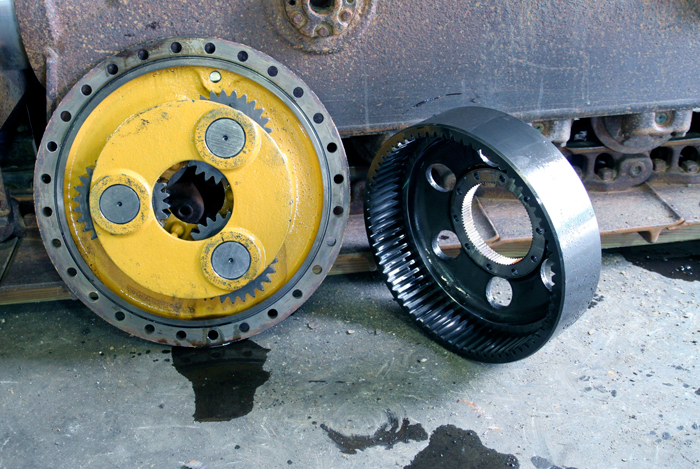
The main function of a planetary gear is to reduce rotational speed while increasing torque. This is done by changing the speed ratio between the input and output shafts.
The planetary gear reducer facilitates this adaptation in a simple way, allowing adjustments to the transmission ratios by changing the carrier and the sun gears. This flexibility makes it ideal for various industrial applications, meeting different torque and speed demands without replacing the entire system.
Another important aspect of planetary gears is the balanced load distribution among the components, preventing excessive radial forces on the shaft bearings. This reduces wear, prevents distortion, and ensures more stable and efficient operation compared to other gear systems.
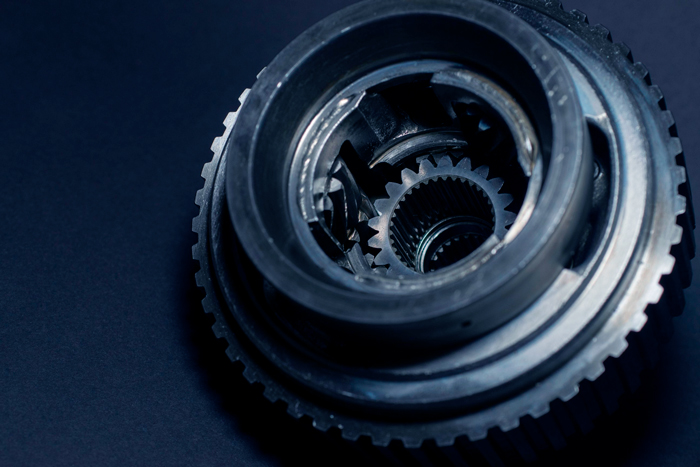
This gear assembly is used in various applications, from the automotive and industrial sectors to high-precision equipment, such as:
With their high transmission capacity, compact design, and strength, planetary gears are ideal for industrial environments that require performance under high shock loads and extreme conditions.
A planetary gear reducer works when the central gear, called the sun gear, rotates and drives the planet gears around it. These gears transfer the motion to the ring gear, which sits on the outer part of the system.
This system uses spur gears, which move in opposition within the same plane. The teeth of these gears engage to determine the power, torque, and speed of the system, adapting according to the application.
Simple planetary gear reducers offer speed reductions of up to 10:1. Compound models allow even greater reductions, expanding the possibilities for mechanical adjustment and efficiency in applications that demand greater control of speed and torque.
Planetary gears generally operate more quietly than other systems, such as rack and pinion gears. This is because the smaller gears in planetary systems generate a lower pitch line velocity. However, at high speeds, noise can increase due to simultaneous engagement of multiple teeth.
To minimize noise, it is essential to use high-quality, precision equipment. Well-manufactured gears have more uniform contact between teeth, which reduces noise. The use of proper lubricants is also essential for quieter operation.
Planetary systems can generate significant heat, especially at high speeds or during continuous operation. This occurs due to internal friction and mechanical forces. Since these systems have a compact design, heat dissipation can be challenging due to limited ventilation space.
To maintain efficiency and extend the service life of planetary gears, cooling measures are necessary. Lubricants circulated through heat exchangers help dissipate the generated heat. In some situations, cooling fans are also used. Monitoring temperature is essential to prevent overheating, which can degrade the lubricant and accelerate gear wear.
Discover the most advanced planetary speed reducer technology with the Planetary Revolution by Zanini Renk. Equipment with an intelligent design developed to meet the needs of the sugarcane industry with high efficiency.
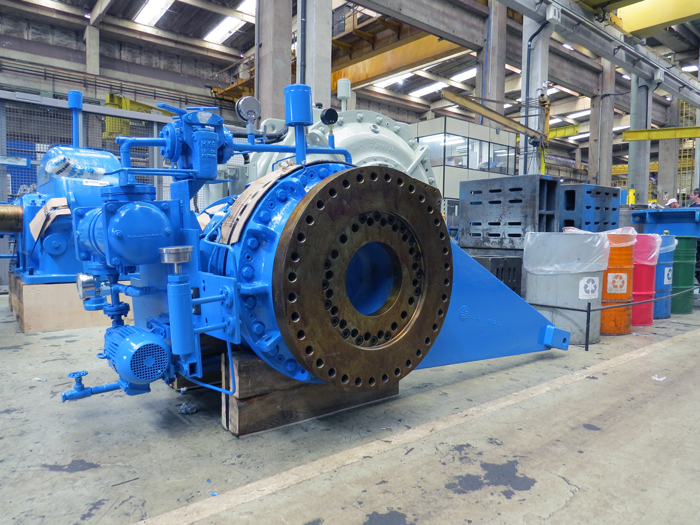
The Planetary Revolution increases torque capacity, operational flexibility, and contributes to the performance of your operation. It also addresses common challenges of planetary systems, being the best solution for:
Learn more about the innovations and benefits of the Planetary Revolution or contact our team for more information.