+1 (226) 337-9660

 English
Search

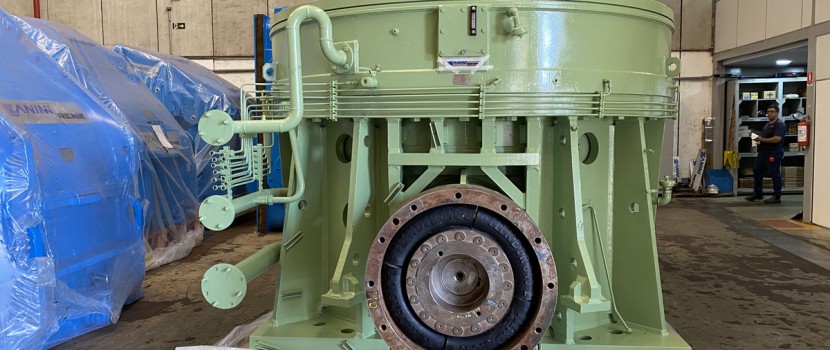
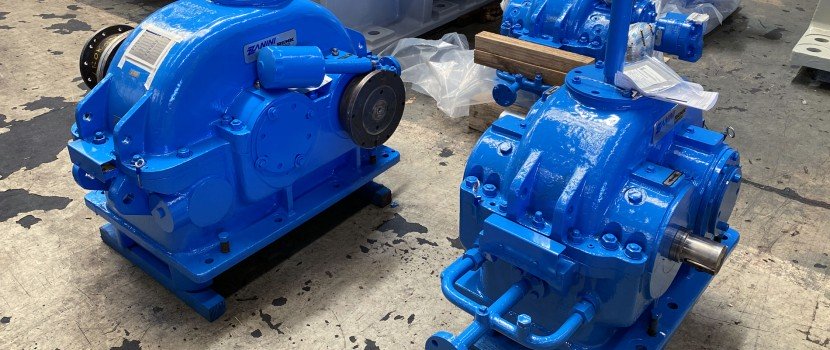
A speed increaser is a mechanical device used to increase the rotational speed of motors, shafts, and spindles. It is essential in situations where slow rotation must be converted into fast rotation.
A common example of this application can be found in wind energy generation. The wind causes the turbine blades to rotate slowly, and this movement drives the speed increaser, which converts that slow rotation into a much faster one, enough to power an alternator and generate electricity.
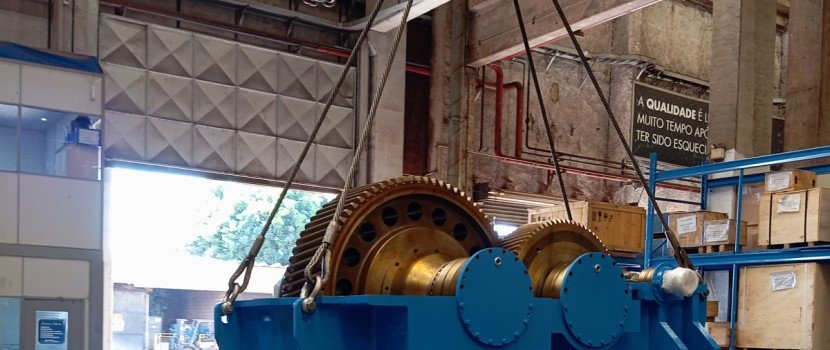
The operation of a speed increaser is based on a gear system. A driving gear with a larger diameter transmits torque to a smaller driven gear. If the driving gear has twice the diameter of the driven gear, one full rotation of the larger gear produces two rotations of the smaller one. This way, the smaller gear spins twice as fast as the larger one, creating the speed increase.
Speed increasers are used in several industrial sectors:
Among the most common types of speed increasers, hollow shaft models and right-angle configurations stand out.
A speed increaser is used to increase rotational speed. A speed reducer, on the other hand, works in the opposite way, reducing speed and increasing torque.
Here are the main differences between them:
| Feature | Speed reducer | Speed increaser |
|---|---|---|
| Main function | Decrease speed and increase torque | Increase speed and reduce torque |
| Speed | Input > Output | Input < Output |
| Torque | Input < Output | Input > Output |
| Operating principle | Uses gears to reduce speed and increase torque | Uses gears to increase speed and reduce torque |
| Common applications | Industrial automation, conveyors, cranes, material handling | Wind energy generation, machine tools, compressors, pumps |
| Usage example | Industrial transport systems, cranes | Wind turbines, power generators |
| Additional characteristics | Ideal for precise speed and force control | Necessary for operations requiring high rotation |
| Benefits | Provides the force needed to move heavy loads | Optimizes speed for specific applications such as energy generation |
Both devices use gear principles to transform power, but the design and application of each are tailored to meet the specific needs of their functions.
Speed increasers improve operational efficiency by allowing equipment to operate at higher speeds. They are versatile and can be adapted to a wide range of industrial applications.
There are different types of speed increasers, such as hollow shaft and right-angle models, each suited to different scenarios. This flexibility allows integration into complex systems, providing customized solutions that meet the specific needs of each application.
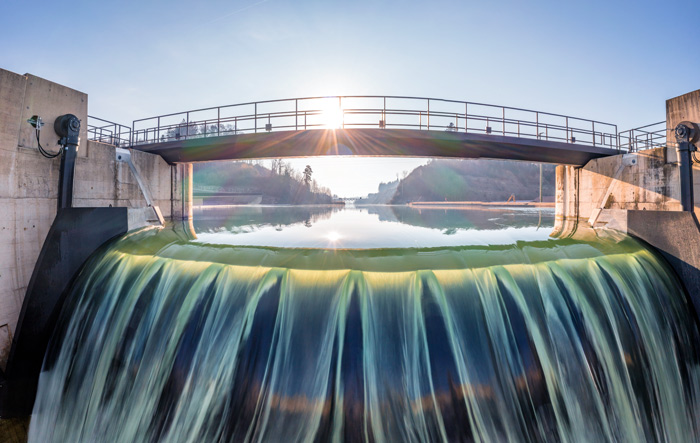
In clean energy generation, speed increasers are essential. They are used in wind turbines and hydropower plants to boost clean, renewable energy production.
To maintain the efficiency of the speed increase provided by the device, it is essential to perform regular maintenance and inspections. Here are some essential care practices:
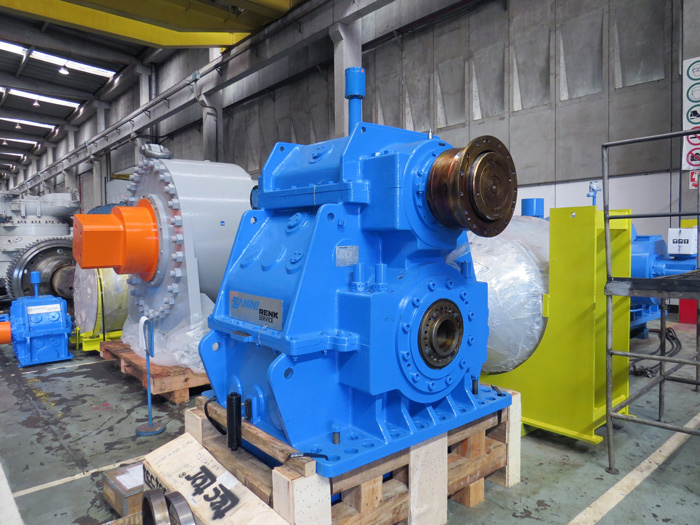
At Zanini Renk, we bring more than 40 years of experience supplying speed reducers and speed increasers that are synonymous with quality and innovation. We serve several markets worldwide, including the Americas, South Africa, Asia, Oceania, and the European Union.
Our company is recognized in both domestic and international markets for the excellence of our products, which are synonymous with performance and reliability. We serve the needs of various industries, including mining, cement, steel, sugar and ethanol, among others.
Zanini Renk offers speed increaser solutions for SHPs. These systems maximize robustness and energy efficiency while adapting to the available plant layout. The speed increasers incorporate axial bearing support to withstand turbine axial loads. Zanini Renk offers two product lines: planetary and parallel shaft speed increasers.
With Zanini Renk speed increasers, it is possible to use generators with higher nominal speed, lower weight, and greater efficiency. This results in high performance levels for the complete electromechanical assembly.
Careful component selection and manufacturing quality provide Zanini Renk speed increasers with low maximum permissible sound pressure levels in hydropower generation installations.
Using Zanini Renk speed increasers helps reduce the payback period on the initial investment thanks to several advantages:
Zanini Renk speed increasers transform small hydropower plants into highly efficient and sustainable energy generation systems. Our customized equipment ensures energy efficiency even in low-head applications.
Want to learn more? Contact our team of specialists.
Zanini Renk: trust the history of those you can count on.