+1 (226) 337-9660

 English
Search

Industrial drives are sets of components responsible for driving machines and devices. They are the force behind motion and connect the command to the physical execution in an automated system. They control and ensure the efficiency of machines.
A well-designed industrial drive is compact and robust, capable of handling the speed and torque required for various applications, from controlling heavy motors to fine-tuning delicate operations.
Industrial drives have several functions, such as controlling equipment speed, automation, and integration between systems. They ensure that everything works in a connected and synchronized manner.
The ability to adjust the operating speed of equipment is essential in many industrial processes, such as production lines that require different speeds for different stages, or material handling systems.
Drives allow fine speed regulation, ensuring that motors operate within the desired performance ranges. This increases operational efficiency, extends equipment lifespan, and improves the quality of the final product.
Drives are components that respond to commands from automated systems.
They are responsible for:
These capabilities make drive systems essential for synchronizing complex automated production systems.
When it comes to Industry 4.0, integration with smart systems is essential. Modern drives come equipped with communication capabilities that allow them to exchange information with centralized management systems and other smart devices.
This means that drives execute the necessary actions and provide real-time feedback on performance, working conditions, and potential system failures.
This integration allows more informed decision-making, continuous process optimization, and predictive maintenance, contributing significantly to the overall efficiency of the system.
There are electric, pneumatic, and hydraulic drives, which differ in how they work and their use. Each can be applied to different machines and different stages of the production process.
Electric drives are systems that transform electrical energy into motion, whether rotational or linear, controlling the speed, torque, and direction of machines and equipment.
These systems control:
These drives use specific components that ensure the safe and efficient control of equipment:
Their typical applications range from industrial automation and robotics to household appliances, transportation, and other sectors.
Derived from the Greek word "pneuma," meaning wind or breath, the term "pneumatic" covers the study and application of compressed gases to perform mechanical work.
The fundamental components of pneumatic systems include cylinders and actuators that transform compressed air energy into mechanical motion. The cylinders can be single or double acting, depending on whether the movement is generated by one or two pneumatic connections.
Some of the main advantages of this type of drive:
These drives convert energy, usually in the form of hydraulic pressure, into mechanical work. Their main components are: a reservoir for storing hydraulic fluid, a hydraulic pump, actuators, valves, and filters.
Hydraulic systems are essential in a variety of applications, including injection machines, presses, industrial robots, agricultural machinery, and even aircraft components such as landing gear and flight simulators.
Some of the main characteristics of hydraulic drives:
Drive system devices are elements that allow the control of industrial systems. They are responsible for converting control signals into physical actions.
The four main components of these systems are sensors, actuators, controllers, and transducers. Let’s explore each one, their roles, and how they interact in an automated system.
Sensors are the eyes and ears of the industrial process, responsible for capturing data from the environment and converting physical quantities such as temperature, pressure, volume, and position into electrical signals. They come in various forms, each adapted to measuring different process variables. For example, there are mechanical, resistive, optical, and ultrasonic sensors, each with its own operating principle and suited to different applications.
Actuators are the "muscles" of the system, responsible for performing the physical action needed to modify or control a process. They can amplify energy or convert electrical energy into mechanical, thermal, or another form of energy needed for the task. Pneumatic and hydraulic cylinders, electric motors, and valves are common examples of actuators.
Controllers are the "brain" of the system, receiving information from sensors and executing the control logic to operate the actuators. They are programmed to respond to different process conditions and command appropriate actions.
These devices communicate through industrial networks, using different protocols such as EthernetIP, Profibus, among others, to orchestrate the operation of multiple devices and systems.
Transducers are devices that convert one type of energy into another. In the context of industrial instrumentation, they often refer to the components that transform the signal measured by the sensor (such as a variation in resistance, for example) into an electrical signal that can be read and interpreted by the controllers.
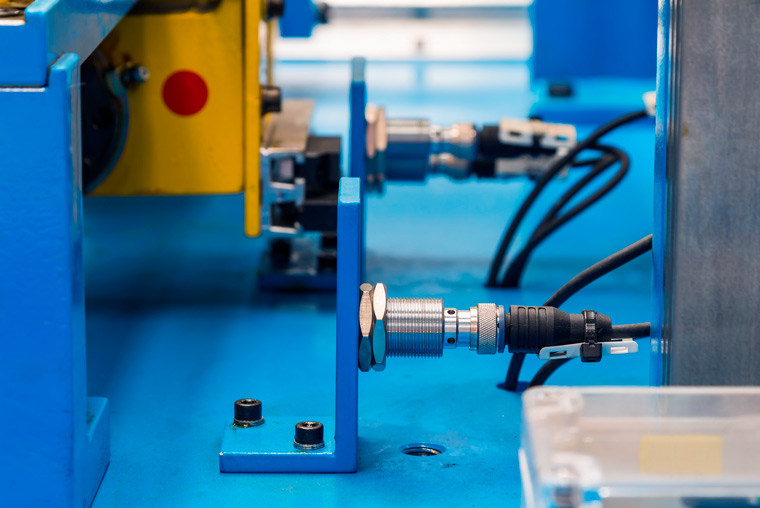
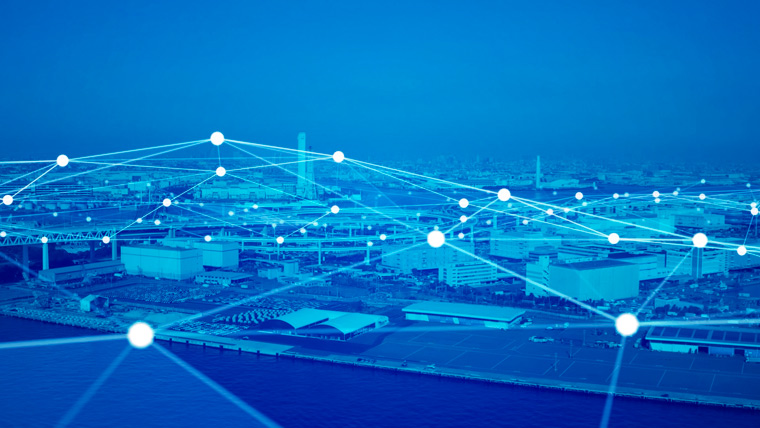
Modern drives have become intelligent and capable of communicating critical data to monitoring and process control systems. This is called IIoT (Industrial Internet of Things), which is the concept of the Internet of Things applied to the industrial environment. Data collected by sensors embedded in drives can be used to optimize operations, perform predictive maintenance, and increase the overall safety of facilities.
This ensures not only the operation of machines, but their precision, effectiveness, and ability to adjust to the different demands of industrial processes.
With the advancement of AI, drives will also be able to predict failures and adjust operations in real time to avoid unexpected shutdowns and unnecessary maintenance.
The main industry trend is the pursuit of energy efficiency, which is not only desirable, but necessary. The growing pressure to reduce energy consumption and operational costs is driving the demand for high-efficiency drives. New regulations and awareness about climate change are encouraging companies to invest in technologies that offer greater energy efficiency.
Customization is another relevant point in the drive market, allowing systems to be adapted to the specific needs of each application. This can include variable speed drives that automatically adjust to load conditions and systems that integrate seamlessly with other automation technologies.
As technologies like IIoT and AI continue to evolve, the ability of drives to communicate and adapt to changes in real time will be a critical competitive advantage for industries looking to stand out in an increasingly dynamic global market.