+1 (226) 337-9660

 English
Search

Heat treatment is a set of processes applied to materials, especially metallic alloys, that involve controlled heating and cooling. The goal is to alter the physical, mechanical, or chemical properties of these materials.
By adjusting the heating cycle and cooling rate, engineers can control the transformation of the material microstructure, allowing the material to achieve specific performance characteristics. Because of its precision and reliability, industrial heat treatment is essential for producing high performance components used in heavy duty applications and power transmission systems.
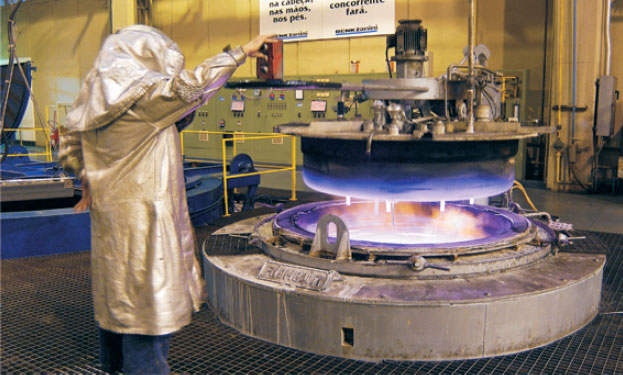
The main objective of heat treatment is to alter the properties of metals so that they meet the specific requirements of each application.
Through metallurgical heat treatment, manufacturers can achieve:
These improvements allow steel components to perform reliably in demanding operating conditions, including high loads, repetitive stress, and continuous operation.
The standard procedure for heat treatment of steels involves heating, holding, and cooling. However, these processes may vary depending on the type of treatment applied. Here are the main stages:
The metal is heated to a specific temperature, which can reach up to 1315°C (2399 °F), determined by the type of metal and the expected result. Heating is done gradually to avoid thermal stresses that could compromise the integrity of the metal.
During this stage, the material is maintained at a stable temperature for a predetermined period. At this point, the transformation of the material microstructure occurs, enabling the desired physical and mechanical changes.
After the heating cycle, the material undergoes controlled cooling. The cooling rate determines the final microstructure and directly influences properties such as hardness, strength, and ductility.
Benefits of heat treatment for industry
Industrial heat treatment provides several advantages for manufacturing and heavy industry, especially when improving the performance of metal components.
By adjusting properties such as hardness, mechanical strength, ductility, malleability, and internal stress levels, thermal processing ensures that metal structures perform their functions efficiently and reliably.
Key benefits include:
Strategic use of heat treatment services can also reduce maintenance costs and improve equipment reliability across industrial operations.
Case hardening is used to increase the surface hardness of low carbon steels while maintaining a softer and more ductile core. This treatment improves wear resistance and is widely used for components such as industrial gears and shafts.
Quenching is a type of heat treatment that involves heating the metal to a temperature range where austenite forms, followed by rapid cooling. This process increases hardness and mechanical strength, but can make the material more brittle, which is why it is often combined with tempering to balance properties.
Tempering is generally applied after quenching and aims to reduce the brittleness of the material and adjust its hardness. This is done by heating the metal to a temperature below the critical point, followed by controlled cooling. The choice of tempering temperature determines the balance between hardness and toughness, allowing the material to be adapted to its final application.
Annealing is performed by heating the material to a temperature where its microstructure is realigned, followed by slow cooling, usually inside the furnace. This reduces internal stresses, decreases hardness, and improves ductility and formability, being widely used to facilitate forming and machining processes.
Normalizing involves heating the metal above the critical temperature to form austenite, followed by cooling. This process refines the grains and relieves internal stresses, making the material more uniform and resistant. It is similar to annealing, but normalizing has a faster cooling rate, resulting in greater hardness and mechanical strength.
Stress relieving is performed by heating the metal below the critical temperature and allowing controlled cooling. This process reduces residual stresses accumulated during processes such as welding or machining, improving dimensional stability and preventing failures such as cracks and deformations during use.
Spheroidizing is a heat treatment that transforms lamellar carbides into spherical particles within a ferritic matrix. This process reduces hardness and increases ductility, making the material easier to machine and form. It is widely used for medium and high carbon steels, especially after forging or rolling.
Zanini Renk is proud to operate the largest heat treatment furnaces in Brazil. Discover the technology that makes a difference in the industrial sector:
At Zanini Renk, excellence in heat treatment is ensured by strict quality control covering every stage of the process. We measure material hardness on the Brinell and Rockwell scales and ensure the integrity of all parts using state-of-the-art automatic microhardness testers. We also have an advanced supervision system that continuously monitors the furnaces.
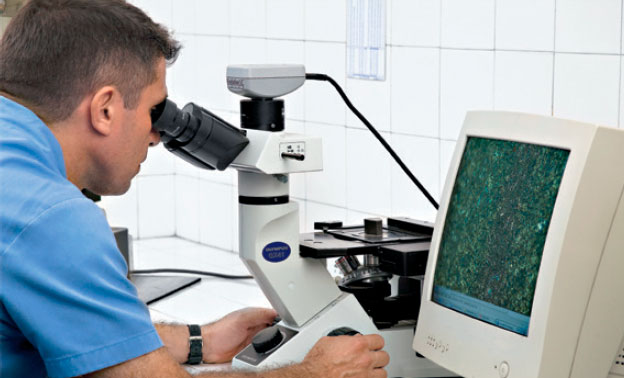
Zanini Renk is proud to operate the largest carburizing furnace in Brazil, a leader in diameter and depth, complemented by an internal metallurgical analysis laboratory.
In the laboratory, each component undergoes detailed metallographic testing, ensuring strict control of material properties. Compliance reports are issued to guarantee total transparency and the superior quality of the heat treatments performed.
Furnaces equipped to perform heat treatments such as quenching, annealing, normalizing, gas carburizing, stress relieving, and tempering. These furnaces are ideal for processing long parts or complex shapes.
Designed for heat treatments such as quenching, annealing, normalizing, stress relieving, and tempering. Their configuration is especially suitable for larger-volume parts or shapes that require horizontal positioning to ensure uniform and efficient treatment.
Essential in the final stage of heat treatment, the cooling tank ensures the desired properties, such as hardness and strength, are achieved while preserving the superior quality of the products. Controlled cooling is performed with precision to meet the technical requirements of each application.
Trust in the history of those who can deliver. Contact our specialists.